Guides
Miami cold chain packaging for meal prep subscriptions in year-round heat
Miami meal prep subscriptions live or die on cold chain packaging, and year-round heat, humidity and storm weeks decide whether food arrives safe.
What to take away
- Miami has no cold season, so a box sealed at 38F can sit in a 95F van and then on a sunny porch before anyone opens it.
- Insulated liners hold cold and gel packs supply it; buying more of one rarely fixes a problem caused by the other.
- Dwell time is the number to measure, and you measure it with a data logger in a real van on a real route.
- Florida permits refrigerated prepared meals under a food code modeled on the FDA Food Code 2022, with cold holding at 41F or below.
- Packaging runs roughly $2.00 to $3.50 per delivery before labor, and a failed box costs the food, the delivery and often the subscriber.
Why heat decides the whole operation here
Miami has no cold month to hide in. A box that leaves your kitchen at 38F can sit in a van at 95F and 80 percent humidity, then wait on a porch in direct sun.
Treat the delivery window as the real shelf life. A subscriber who unpacks at 7 p.m. is eating food packed at 9 a.m. Every hour between those points is a temperature decision you either made or left to chance.
Heat also hits the people doing the work. OSHA heat illness guidance covers hot kitchens and the backs of vans, and it applies to prep cooks, packers and drivers alike. Water, shade, rotation and a written acclimatization plan for new hires cost almost nothing.
Your customers are spread from Brickell to Kendall to Hialeah to Miami Beach, and drive times swing by bridge, causeway and afternoon storm. That is why meal prep startup costs belong in the same conversation as demand, margins and delivery radius rather than in a separate spreadsheet.
Liners, gel packs and the dwell time test
Insulated liners and gel packs are the two levers that matter. Liners hold the cold in; gel packs supply the cold. Neither works alone.
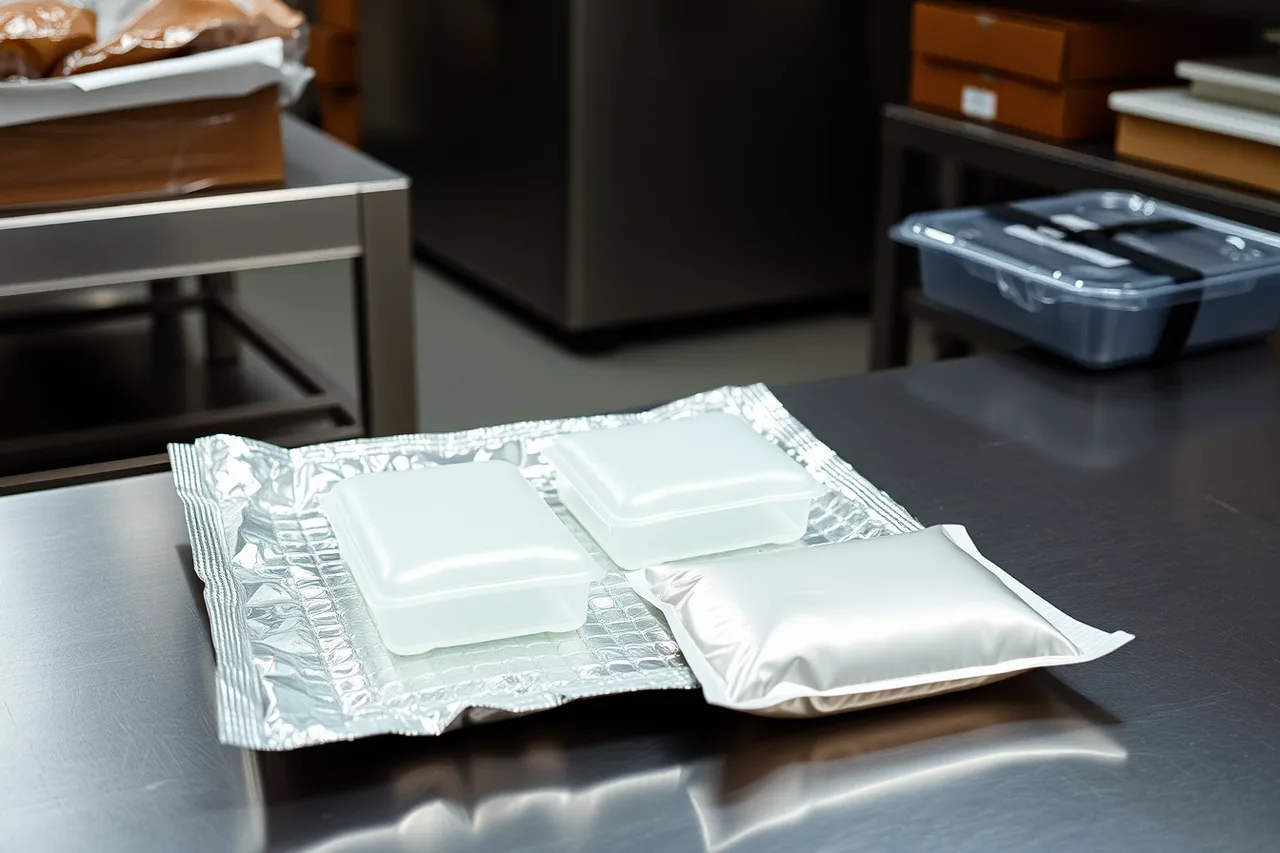
Recycled denim and paper-based liners cost less and recycle curbside in Miami-Dade. Foil bubble liners hold better in a hot van but are harder for customers to dispose of. Reusable cooler bags cost the most per unit and come back only if you run a collection route.
Gel packs come in flat sheets, bottles and rigid bricks. Sheets freeze fast and pack tight. Bricks hold temperature longer. For a two-hour Miami route, one mid-weight sheet plus one brick usually beats three sheets.
Dwell time is how long a packed box stays under 40F from sealing to unboxing. Test it with a data logger in a real van on a real route, never in your air-conditioned kitchen.
Dwell time test
- Pack a standard box exactly as you would for a Tuesday delivery.
- Place a calibrated data logger between the protein and the liner wall.
- Load it in the position it would occupy on the route.
- Drive the full route, including the last stop, then leave the box on a shaded porch for 30 minutes.
- Download the log and note the time the box crossed 40F.
- Repeat in a rainy week and a dry week, then set your packing spec to the worse result.
A worked example: a 12-meal box with two flat gel sheets held 41F for 3 hours 10 minutes in a sedan with working air conditioning. The same box in an unshaded van crossed 40F at 2 hours 5 minutes. One brick pack and a mylar liner fixed it for about 90 cents more per box.
Scale coolant with meal count rather than plan name. If thawed-food complaints are eating your mornings, the packing details in how to package meal prep products are worth copying.
What Florida permits and labels require
Florida is not a cottage food state for this business. Cottage food rules cover shelf-stable baked goods, not cooked proteins and prepared meals. Refrigerated prepared meals need a food service establishment permit from Miami-Dade County's health department or the Florida Department of Agriculture, depending on your operation.
Those permits follow a state food code modeled on the FDA Food Code 2022. Cold holding sits at 41F or below, hot holding at 135F or above, ready-to-eat food held more than 24 hours gets date marked, and cooling cooked food follows a written procedure.
Read the cold holding and date marking chapters before you write your plan. That is the reference your inspector is working from.
Packaged meals need an ingredient list, allergen declaration, net quantity, and the name and place of business of the manufacturer. The FDA's nutrition and food labeling rules govern what must appear, and Florida adds requirements for food prepared in a permitted facility.
At least one certified food protection manager must be on staff during operating hours. ServSafe certification through the National Restaurant Association is the common path in Miami. Post the certificate where an inspector can find it.
Delivery vehicles count. Insulated containers must be cleanable, and food stays at temperature from kitchen to door. A driver who stops for 40 minutes with the van off has created a temperature event, not taken a break.
Hurricane season, priced into the calendar
Atlantic hurricane season runs June 1 through November 30, and Miami sits in the middle of the cone. Read the NOAA Atlantic hurricane season outlook each spring before you set production targets.
Plan daily from NOAA data rather than a phone app screenshot. The National Oceanic and Atmospheric Administration weather page carries the forecasts and tropical advisories a delivery decision can be built on.
Write a three-tier plan while it is sunny:
Hurricane season
- Watcha system is in the Atlantic. Confirm generator fuel, ice supply and dry ice vendor lead times.
- Warninga watch or warning covers South Florida. Pause new orders, shift production earlier, text subscribers a revised window.
- Landfallroads close. Convert the week to pickup only, or pause billing and credit the skipped week.
Your subscriber agreement should say what happens to a paid week a storm cancels. Credit, double-up delivery or refund: pick one and put it in writing before June.
Stock two weeks of liners and gel packs before the season starts. Florida suppliers run short fast once a storm enters the Gulf, and freezer space is the real constraint, not cash.
Bilingual menus and labels
Miami subscribers order in English and Spanish, often in the same household. Bilingual is not a translation afterthought; it changes how you name dishes, describe spice and explain reheating.
Name dishes the way customers search. "Pollo a la plancha con arroz y frijoles" and "grilled chicken with rice and beans" should both appear, with the same photo and the same macros. Do not make one language primary and the other a footnote.
Label every container in both languages: protein, sides, allergens, reheat time and use-by date. Allergen terms matter most. "Maní" and "peanut" must both be visible, not one or the other.
Spice and texture words do not translate cleanly. "Picante" carries a different expectation than "spicy." Test wording with a handful of subscribers before you print 5,000 labels.
Make the subscription page, cancellation flow and delivery texts bilingual too. A Spanish-speaking customer who cannot read the cancellation page calls support, and those calls cost more than the translation.
Menu planning should follow what sells here: tropical fruit, plantains, rice bowls, Cuban and Caribbean staples, plus lighter options for the beach and Brickell crowd. The format shifts covered in meal prep products and packages show up in Miami first, because your customers adopt new formats quickly.
Cost per delivery and what moves it
Packaging is a variable cost that scales with every box, so small changes compound. Track cost per delivery, not cost per box, because a box that fails costs you a refund and often a subscriber.
Cost per delivery
| Item | Typical low end | Typical high end | Notes |
|---|---|---|---|
| Insulated liner | $0.60 | $2.80 | Paper and denim cheapest, foil bubble mid, reusable highest |
| Gel packs | $0.35 | $1.40 | Scales with meal count and route length |
| Box and tape | $0.40 | $1.10 | Corrugated weight matters in humidity |
| Labels and inserts | $0.15 | $0.55 | Bilingual printing adds a small premium |
| Ice or dry ice | $0.00 | $1.20 | Only for long routes or storm weeks |
A mid-range Miami box lands near $2.00 to $3.50 in packaging before labor. The cheap liner is rarely the cheap choice once you count the food it protects.
Reusable cooler bags look expensive until you run a collection route. A subscriber who stays 30 weeks and returns the bag every week can beat disposables on cost per delivery.
Packaging changes belong in your meal prep rates review, not in a separate budget line. When liner prices jump, you need to know whether to absorb it, shrink the box or raise the plan price.
Build one model: packaging, food and labor per delivery, then your margin. Update it monthly. A price list and profit model keeps all three in one view.
Common questions
Does Miami require a food service permit for a meal prep subscription?
Yes. Refrigerated prepared meals fall outside Florida cottage food rules, so you need a food service establishment permit and a certified food protection manager on staff. Confirm the specific permit with Miami-Dade County's health department or the Florida Department of Agriculture before you take orders.
How long can a meal prep box sit outside in Miami heat?
Test it with a data logger on your own route. Most Miami operators target under two hours from seal to unboxing in summer, and less on long routes. Your number depends on your liner, your coolant and your route, not on a rule of thumb.
Are gel packs enough without an insulated liner?
No. Gel packs supply cold and liners hold it. A gel pack in an unlined box loses the fight within minutes in a hot van.
What happens to a paid week if a hurricane cancels delivery?
That is your call, but it must be written in the subscriber agreement before June. Credit, double-up delivery and refund are the three common options, and subscribers forgive a stated policy faster than an improvised one.