
Guides
How to package meal prep products so customers reorder without asking
Packaging decides reorders: portion format, container, label and packing slip each send a signal the subscriber reads before the first bite.
What to take away
- Reorder rate tracks the container and the label as much as the recipe, so packaging meal prep products is a repeat-order decision. A lid that leaks on the commute ends the subscription before the food is tasted.
- Match the format to how the subscriber eats. Single-serve trays suit one person, family pans suit households, and a mix of both keeps a two-person order from going stale.
- Put the reorder date, the next menu and a one-tap link on the packing slip. The reminder is the cheapest channel a meal prep business owns.
- Cost packaging per delivered meal, not per case. A cheaper tray that leaks costs a replacement box and the subscriber.
- Keep the label honestnet weight, ingredients, allergens and a use-by date that matches the cold chain the box actually travels.
Here is the lead-in and list:
- This article covers general prepared-meal business operations, not individualized food-safety, allergen, labeling, nutrition, licensing, tax or legal advice. Requirements depend on ingredients, process, packaging, storage, delivery and jurisdiction. Confirm controls with your state or county health department and a qualified food safety professional.
The four packaging decisions behind a reorder
Packaging is a set of choices a subscriber feels before reading a word. Each one either earns the next order or quietly ends the subscription.
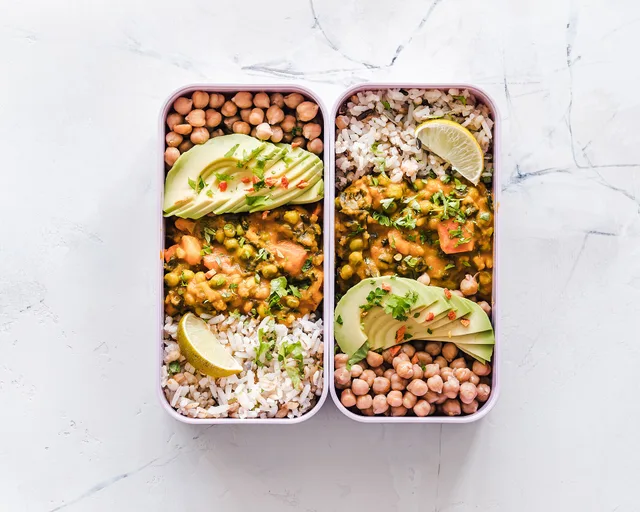
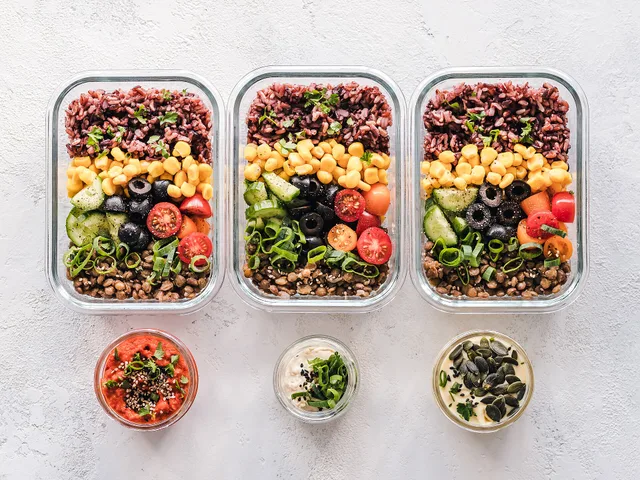
Format. Single-serve trays, family pans, bulk bags, and vacuum-sealed portions each fit a different household. A subscriber cooking for one wastes a family pan; a family of four resents eight small trays. Ask at signup how many people eat, then let the format follow.
A 24-ounce polypropylene entree tray from Dart or Pactiv Evergreen fits one person. A half-size pan from Cambro or Vollrath fits four.
Material. Rigid polypropylene trays take reheating and stack in a fridge. Kraft or molded-fiber bowls suit cold salads and photograph well. Vacuum-sealed bags cut freezer burn on proteins. Choose by how the meal is stored and reheated, not by unit price alone.
Eco-Products and World Centric both sell molded-fiber bowls sized for cold sides. Both compost only where your waste hauler accepts the material.
Closure. A lid that seals is the whole product. Venting, film seals and tamper bands each add a step at packing. Test the closure through a real delivery run before it goes to a hundred subscribers.
Label and insert. The label carries net weight, ingredients, allergens and a use-by date. The insert carries the reorder date, the next menu and a link back to the order page. Both are packaging, and both drive the second order.
Both print on the same thermal printer. A Zebra ZD421 typically runs $300 to $500; a Dymo LabelWriter 550, typically $100 to $200, handles a small weekly run.
What each format costs and who it suits
Best for
- Single-serve tray (Dart, Pactiv Evergreen)
- One-person households, office lunches
- Family pan (Cambro, Vollrath half-size)
- Households of three or more
- Vacuum-sealed portion (VacMaster, Weston)
- Freezer storage, proteins
- Bulk bag
- Shared meals, soups, grains
- Molded-fiber bowl (Eco-Products, World Centric)
- Cold salads and grain bowls
Trade-off and typical cost
- Single-serve tray (Dart, Pactiv Evergreen)
- More units to pack and label; typically 12 to 25 cents a tray with lid in case quantities
- Family pan (Cambro, Vollrath half-size)
- Slower to cool, needs oven space; reusable pans typically $10 to $30 each
- Vacuum-sealed portion (VacMaster, Weston)
- Needs a sealer and a flat seal check; chamber machines typically $1,000 and up, bags 8 to 20 cents each
- Bulk bag
- Portion control falls to the subscriber; typically 15 to 40 cents a bag
- Molded-fiber bowl (Eco-Products, World Centric)
- Compostable only where accepted locally; typically 25 to 60 cents each
Cost the whole unit, not the tray. Add the lid, the label, the insert, the ice pack and the box, then divide by meals delivered. A tray that saves a few cents and leaks costs a replacement box and the subscriber.
Shipping carries the biggest line. A ClimaCell paper liner from TemperPack plus gel packs from Nordic Ice typically add $2 to $6 per box, and more in summer heat or on two-day transit.
Making the second order the easy choice
A subscriber who liked the food still has to remember to reorder. Packaging can carry that reminder.
- Print the reorder date on the insert, not just the use-by date.
- Show the next week's menu on the same slip.
- Put a scannable link to the order page on the label.
- Include a one-line note naming the cook or the kitchen.
- Ask for a rating on the slip, before the food is gone.
If you collect pans or trays back, DayMark DissolveMark labels wash off in a commercial dishwasher. That keeps reusable containers clean without a scraping step.
The reminder works because the subscriber already has the box open. A text or email a week later competes with everything else on the phone.
Marketing channels side by side
Fits a meal prep business when
- Word of mouth
- The business already has satisfied customers to ask
- Partner referrals: gyms and trainers
- The partner sees the need before the subscriber does
- Maps and local listings
- Reviews accumulate from every weekly delivery
- Bringing the subscriber back
- A reminder is welcome rather than intrusive
Weak point
- Word of mouth
- Slow to start
- Partner referrals: gyms and trainers
- Partners expect something in return
- Maps and local listings
- Competitors bid on the same terms
- Bringing the subscriber back
- Requires records the business may not keep
Packaging is the only channel that reaches every subscriber every week. Treat the insert as ad space you already paid for.
What to verify before you print a label
Label claims fall under federal and state rules. The Federal Trade Commission: Advertising FAQs: A Guide for Small Business covers truthful claims and endorsements. A testimonial on a box must reflect real experience, and any paid relationship behind it must be disclosed.
Facility and process rules come from your state or county. The U.S. Food and Drug Administration: State Retail and Food Service Codes and Regulations lists the retail-food agency for each state. Your kitchen, storage and delivery model decide which rules apply.
Keep the purchase orders, label proofs and delivery records that support what you claim. The Internal Revenue Service: What kind of records should I keep? explains the records that back income, expenses and assets. Packaging spend is a deductible cost only if you can show it.
Where packaging sits in the offer
Packaging is one part of the offer a subscriber buys. The meal prep products and packages guide covers how offers are structured and priced. Read it before you commit to a container that only works for one format.
Format also decides which products carry the margin. The most profitable meal prep products breaks down where the money sits across a menu. A tray that suits a high-margin item is worth more than a cheap tray that does not.
Parting checks
Test one format with ten subscribers before ordering a pallet. Track reorder rate by format, not by menu alone, so you know which container earns the second order. If the reorder rate holds, expand the format; if it slips, the container is the first suspect.
Common questions
What is the single biggest cause of a lost reorder?
A leak or a lid that pops in transit. The subscriber blames the food, not the tray, and cancels. Test any new container through a full delivery run before it reaches paying customers.
Should I use compostable packaging?
Only if it survives the trip and the reheating. Molded-fiber bowls from Eco-Products and World Centric work for cold items and often fail under a hot, saucy meal. Match the material to the dish, then check what your local waste stream actually accepts.
How do I know if the insert is working?
Track reorders that come through the slip's link against reorders that arrive without one. If the link drives most second orders, the insert is doing the work and the email reminder can shrink.