Guides
The permits and rules behind a legal meal prep
Meal prep permits run from health department plan review to commissary agreements, and each one is filed with a different city or county office.
What to take away
The permits and rules behind a legal meal prep business come from several offices, not one.
- The FDA Food Code is a model, not a license; your county or state health department adopts its own version and issues the food establishment permit you operate under.
- A food establishment permit is tied to a specific address and menu. Cooking in a commissary, a shared-use kitchen or your home each produces a different application.
- Cottage food exemptions usually cover shelf-stable baked goods and jams sold direct to consumers, and usually exclude cooked proteins and refrigerated meal boxes.
- A subscription box that crosses state lines can trigger FDA facility registration and FSIS labeling rules on top of local permits.
- Entity registration, EIN, sales tax, workers' compensation and a commissary use agreement are separate filings from the health permit, and none substitutes for it.
This is general information about how meal prep permits are structured, not legal, tax or food safety advice. Requirements depend on your menu, process, packaging, storage and delivery model. Your location matters too. Confirm each item with your state or county health department and a qualified food safety professional.
The six stages where permits attach
A meal prep business meets regulators at six points, and each point has its own paperwork.
Six permit stages
- Qualificationregister entity, apply health permit
- Estimatecost kitchen, confirm licensed process
- Preparationkitchen inspected
- Deliveryvehicle and cold chain rules
- Documentationlabels, invoices, temperature logs
- Paymentsales tax, payroll, insurance filings
The permit table below turns those six points into named filings. Owners who treat this as one checklist end up with a permit for the wrong address. Treat each stage as a separate filing with a separate office.
What the FDA Food Code is and is not
The FDA Food Code 2022 is a model set of provisions for retail and food service. It is not a federal license, and no one operates under it directly. States and territories adopt their own versions, often with changes, and your inspector enforces the adopted text.
The FDA publishes a state-by-state directory of retail food codes and agencies. Use it to find the agency that inspects meal prep in your county. Read that agency's application packet rather than the model code.
Two examples show where the local rules come from. California enforces the California Retail Food Code through county environmental health departments, such as the Los Angeles County Department of Public Health. New York City enforces Article 81 of the New York City Health Code through the New York City Department of Health and Mental Hygiene.
Local adopted codes commonly require cold holding at 41°F or below and hot holding at 135°F or above. They also require date marking of ready-to-eat refrigerated food for seven days.
Cooling limits are 135°F to 70°F within two hours, then 70°F to 41°F within four more hours. Hand sinks, warewashing and no bare-hand contact with ready-to-eat food are standard plan review items. Most adopted codes also require a certified food protection manager and written employee health procedures.
The permits, by name
Fees vary by state and county. A food establishment permit often runs $200 to $1,000 a year, and plan review often runs $100 to $1,500. An LLC filing often costs $50 to $500, an EIN is free, and FDA food facility registration has no fee. Cottage food registration often costs $0 to $100.
| Permit or filing | Who issues it | What it covers | Typical cost or trigger |
|---|---|---|---|
| Food establishment permit | County or state health department | The kitchen address, menu and process you are approved to run | Often $200 to $1,000 a year; fee depends on risk and seating |
| Plan review approval | Same health department, before construction or build-out | Layout, equipment, hand sinks, warewashing, cold storage | Often $100 to $1,500; required before build-out |
| Commissary or shared-use kitchen agreement | The kitchen operator | Your scheduled hours, storage space and cleaning duties | Typically $15 to $50 an hour or $300 to $1,500 a month in many markets |
| Cottage food registration | State agriculture or health department, where offered | Home production of exempt shelf-stable foods | Often $0 to $100; sales cap varies by state |
| Business entity registration | State secretary of state or business registry | The LLC or corporation itself | Often $50 to $500 to file; annual report fees vary |
| EIN | IRS | Federal tax identification for the business | Free |
| Sales tax permit | State department of revenue | Collecting and remitting tax on taxable sales | Often free to $50; prepared food may be taxable |
| Food processor or manufacturing license | State agriculture department, in some states | Producing packaged food for wholesale or retail resale | Often $100 to $1,000; applies to wholesale or resale |
| FDA food facility registration | FDA | Facilities that manufacture, process, pack or hold food for US consumption | No fee; required for many facilities that sell across state lines |
| Weights and measures registration | County or state | Scales used to sell by weight | Often $25 to $200 per scale or location |
| Workers' compensation policy | State fund or private carrier | Employee injury coverage, required at first hire | Premium varies by payroll, job class and state |
| Vehicle and delivery permits | City or county, in some jurisdictions | Mobile food units and some delivery operations | Often $50 to $500; ask before routing deliveries |
The food establishment permit decides whether you can cook. Everything else precedes it, supports it or follows from it. Start there and let the health department tell you which of the remaining filings apply to your process.
Permits and filings
- Food establishment permitcounty or state health department
- Plan review approvalhealth department before build-out
- Commissary agreementkitchen operator
- Cottage food registrationstate agriculture or health
- Business entity registrationsecretary of state
- EINIRS
- Sales tax permitstate department of revenue
Commissary, shared-use or home
A commissary kitchen is a licensed facility you rent by the hour or by the month. You get an inspected address, and your permit is issued against it. Shared-use kitchens work the same way, but you share equipment and storage. The agreement has to spell out who cleans what and where your food is stored between shifts.
Kitchen options compared
Commissary
- Permit address
- Yes
- Equipment
- Dedicated
- Food types
- Any
- Sales
- Wholesale/retail
- Cleaning duties
- Yours
Shared-use
- Permit address
- Yes
- Equipment
- Shared
- Food types
- Any
- Sales
- Wholesale/retail
- Cleaning duties
- Agreement
Home
- Permit address
- No
- Equipment
- Home
- Food types
- Shelf-stable
- Sales
- Direct only
- Cleaning duties
- Yours
Cottage food laws let you produce certain low-risk foods at home. Most states limit this to shelf-stable baked goods, jams and direct sales, and most exclude cooked and refrigerated meals. Check your state's cottage food law before you build a home kitchen around a subscription box.
A commercial lease or kitchen agreement is a contract. Have an attorney read it before you sign, particularly the clauses on equipment, insurance and termination.
Labels, delivery and cold chain
If you package meals for retail sale, labeling falls under FDA rules, and meat and poultry labels fall under FSIS. State requirements add items such as net weight, ingredient list, allergen statement and a business address. Your state agriculture department or health department can tell you which labeling rule applies to your package.
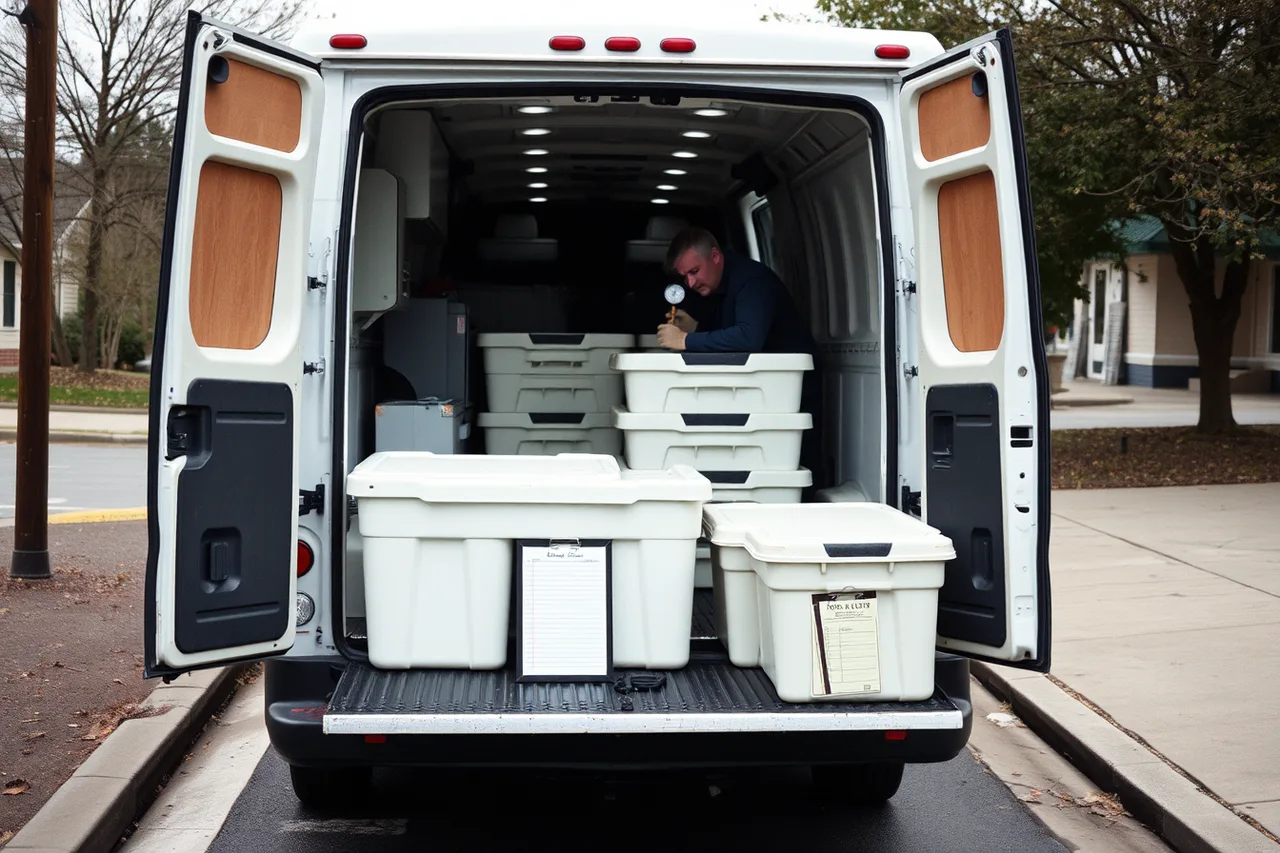
Delivery is where the cold chain is easiest to break. A refrigerated van, insulated totes and a documented temperature log are the usual controls. Your local health department will tell you whether a vehicle permit is required. Do not assume a delivery route is covered by the kitchen permit.
Employment and accessibility duties
Federal wage duties start at the first hire. Once you hire, the US Department of Labor small business compliance assistance covers several duties. These include minimum wage, overtime, timekeeping and child labor. It also covers leave duties and the notices and records you must keep. State law adds its own requirements on top.
Slips, burns, knives and chemical storage are kitchen hazards, and the Occupational Safety and Health Administration (OSHA) covers them. OSHA duties attach at your first hire, not before. Owners with no employees have few OSHA obligations that apply to a one-person kitchen.
Public accommodation duties attach to a storefront, a pickup point you staff or a website tied to a physical location.
The Department of Justice ADA guide for small businesses explains public accommodation duties for existing facilities. These include barrier removal where it is readily achievable, accessible routes and service practices. It applies to your website and your pickup point, and to a storefront.
The filing order for a ten-meal commissary box
Suppose you plan a weekly box of ten refrigerated meals, cooked in a rented commissary, delivered by your own van within one metro area, sold by subscription.
Filing order example
- Register LLC and apply for EIN
- Sign commissary agreement, confirm permit coverage
- Submit plan review, apply food establishment permit
- Register for sales tax
- Confirm labeling with state, check FSIS
- Ask health department about vehicle permit
- Buy workers' compensation, post DOL notices
- Set review date for changes
- File the LLC with your state business registry and get an EIN from the IRS. The registry filing often costs $50 to $500, and the EIN is free.
- Sign the commissary use agreement. The health permit is issued against that address, so line up the kitchen first.
- Send the plan review packet to the county health department for the commissary layout, the equipment and your ten-meal process. Plan review often runs $100 to $1,500.
- Pass the certified food protection manager exam. Most adopted codes require one before the permit is issued.
- Apply for the food establishment permit for the commissary address. The permit names the address, the menu and the process, and it often runs $200 to $1,000 a year.
- Register your scales with county weights and measures if you sell any item by weight. Registration often runs $25 to $200 per scale or location.
- Get the state sales tax permit from the department of revenue before the first subscription payment. Prepared food may be taxable.
- Buy workers' compensation coverage at the first hire, and ask the county whether delivery needs a vehicle permit before the first route.
FDA food facility registration does not appear on this list because the box stays inside one metro area and you sell direct to consumers.
None of these steps is a substitute for the others. A permit issued for one address does not travel to a second kitchen, and a menu change can require a new review.
Common questions
Do I need a license to sell meal prep from my home?
It depends on your state's cottage food law. Most states allow home production only for shelf-stable, low-risk foods sold direct to consumers. Most exclude cooked and refrigerated meals. Confirm with your state agriculture or health department before you take an order.
Is the FDA Food Code the law I have to follow?
No. It is a model that states adopt and modify, and your county or state health department enforces its own version. Find your agency in the FDA state directory, then read that agency's application packet.
What is the difference between a commissary kitchen and a shared-use kitchen?
Both are licensed facilities you rent, and both give you an inspected address for your permit. A commissary usually means dedicated or scheduled space. A shared-use kitchen means shared equipment and storage with a written agreement on cleaning and storage.
When do I need FDA registration or FSIS labeling?
FDA food facility registration applies to facilities that manufacture, process, pack or hold food for US consumption. The duty sits in 21 CFR Part 1, and the FDA exempts a retail food establishment, which it defines as a facility whose primary function is selling food directly to consumers.
A meal prep box sold across state lines can pass that line when you pack and hold food for interstate distribution rather than over your own counter. FSIS rules apply to meat and poultry labeling.
How much do meal prep permits cost?
The ranges sit in the permits table above, by filing.