Guides
Getting profitable meal prep products right the first time
Profit on a meal prep line comes from contribution margin per order, not from picking a popular dish. Here is how operators price every ingredient.
What to take away
- Getting profitable meal prep products right starts with one number: each product must cover its ingredients, packaging, labor and delivery and still leave contribution margin per order.
- Contribution margin per order, not menu size, decides which products survive.
- Weekly subscription boxes win on route density; single meals win on price per unit.
- Family meals and corporate accounts carry the lowest delivery cost per portion.
- Price from your own costed recipes, not from a competitor's menu board.
Why the first version of a product line rarely makes money
Most meal prep menus are built by adding dishes customers ask for. That is a popularity test, not a profit test.
A dish can sell well and lose money once you load it with its share of kitchen rent, packing labor and the drive to the customer. Two products with the same price can differ by several dollars per order in what they leave behind.
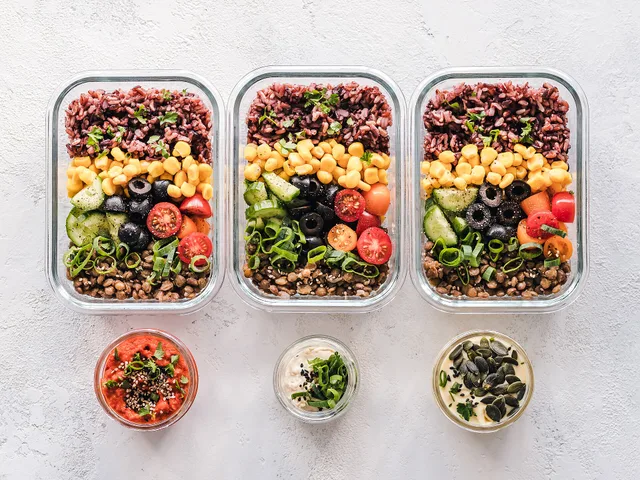
The market splits in two. HelloFresh and Blue Apron ship raw meal kits, while Factor, CookUnity and Trifecta ship prepared single meals. Prepared meals commonly sell for about $9 to $15 per serving as of 2026, depending on protein, portion size and plan length.
The fix is arithmetic you can run before the menu goes live.
The four numbers behind every product
For each item, write down four figures:
Four numbers behind every product
- $72Weekly box price
- $19Ingredient cost per portion
- $4Packaging cost per portion
- $32.50Contribution margin before overhead
- Ingredient cost per portion.Weigh and cost the recipe as written, including oil, sauce and garnish. A 12 to 16 oz prepared meal typically runs $2 to $5 in ingredients, more when beef or fish leads the plate.
- Packaging cost per portion.Container, lid, label, sleeve and ice pack if shipped. A microwave-safe 32 oz container and lid typically costs $0.35 to $0.80 in case quantities from suppliers such as WebstaurantStore or Gordon Food Service.
- Direct labor minutes.Prep, portion, seal and stage, multiplied by your loaded hourly wage. Loaded kitchen wages generally land between $15 and $20 an hour across most US markets as of 2026.
- Delivery cost per order.Driver hours plus fuel plus vehicle cost, divided by stops on that route. Most operators see $5 to $12 per stop; Onfleet and Routific plan routes on the same logic.
Add them. Subtract from the price the customer pays. What remains is contribution margin.
A worked example with your own figures: a weekly box sells for $72, ingredients run $19, and packaging $4. Labor is 35 minutes at $18 loaded, or $10.50, and delivery is $6. The box contributes $32.50 before overhead. That number, not the $72, pays rent.
Which product types carry the best margin
Name to study
- Single meals
- Factor, CookUnity
- Weekly subscription
- HelloFresh, Home Chef
- Family meals
- EveryPlate, Dinnerly
- Breakfasts and snacks
- Daily Harvest, Oats Overnight
- Corporate lunch
- ezCater, Territory Foods
- Retail grab-and-go
- Snap Kitchen
Margin driver
- Single meals
- Highest price per portion
- Weekly subscription
- Predictable volume, one delivery per household
- Family meals
- Low packaging and delivery per portion
- Breakfasts and snacks
- Fills route stops already paid for
- Corporate lunch
- One drop, many portions
- Retail grab-and-go
- No delivery cost
Where it breaks
- Single meals
- Packing labor per unit
- Weekly subscription
- Churn erodes route density
- Family meals
- Larger containers, shorter shelf life
- Breakfasts and snacks
- Low ticket, high handling
- Corporate lunch
- Contract terms and invoicing lag
- Retail grab-and-go
- Spoilage and consignment terms
Subscriptions and family meals usually lead because the delivery leg is spread across more portions. Single meals look strong on price and weak on labor.
Which product types carry margin
Margin driver
- Single meals
- Highest price per portion
- Weekly subscription
- Predictable volume, one delivery
- Family meals
- Low packaging and delivery
- Breakfasts and snacks
- Fills paid route stops
- Corporate lunch
- One drop, many portions
- Retail grab-and-go
- No delivery cost
Where it breaks
- Single meals
- Packing labor per unit
- Weekly subscription
- Churn erodes route density
- Family meals
- Larger containers, short shelf life
- Breakfasts and snacks
- Low ticket, high handling
- Corporate lunch
- Contract terms, invoicing lag
- Retail grab-and-go
- Spoilage and consignment terms
Pricing the line so it holds
Set a floor: no product goes on the menu below the contribution margin you need to cover fixed costs at your planned order volume.
Work backward from the month. Add rent, insurance, software, marketing and your own draw. Divide by expected orders. If fixed costs run $8,000 a month and you plan 500 orders, each order must clear $16.
Then price each product to clear the floor with room for a bad week. Most prepared-meal kitchens target food cost of 30 to 35 percent of the sale price and a contribution margin near 60 percent. If a dish cannot hit the floor, cut it or rework the recipe, portion size or packaging.
Track food cost percentage weekly against your own target in a tool such as MarginEdge, Restaurant365 or meez. When it drifts, the cause is usually portion creep, a supplier price change or waste. Each shows up in a different record.
What to check before you commit
- Recipe costed from invoices, not memory.
- Labor minutes timed on a real prep day.
- Delivery cost per stop calculated for your actual radius.
- Contribution margin per product written down and compared.
- Food cost percentage reviewed weekly against target.
- Price list dated, with the next review scheduled.
Keep records that show income and expenses and support purchases, sales and payroll, as the IRS recordkeeping guidance describes. Those records are the source for every number above.
Pre-commitment margin checklist
- Recipe costed from invoices, not memory
- Labor minutes timed on a real prep day
- Delivery cost per stop for your radius
- Contribution margin per product written down
- Food cost percentage reviewed weekly
- Price list dated, next review scheduled
Claims, labels and local rules
Any health, protein or dietary claim on a product page is advertising. The FTC advertising guide for small business sets the standard: claims must be truthful and supported, and endorsements must reflect honest experience.
Labeling and retail food requirements vary by state and municipality. The FDA maintains a state-by-state directory of retail food codes and agencies. Confirm your own requirements with your state or county health department, and route allergen and nutrition questions to a qualified food safety professional.
The product list itself, with package structures and what each format suits, sits in the meal prep products and packages guide.
Common questions
How many products should a new meal prep menu carry?
Start with the smallest set that fills your delivery routes and covers your fixed costs. Every added item adds prep time, packaging SKUs and spoilage risk. Expand when a product clears its contribution target for several consecutive weeks.
Is a subscription always more profitable than single meals?
No. Subscriptions win when route density is high and churn is low. If customers skip weeks or cancel often, the delivery cost per order climbs and single meals can beat them. Measure both on your own numbers.
How often should prices change?
Review quarterly, or sooner when a supplier raises a key ingredient. Give customers notice before a change and explain it in one line. Frequent small adjustments land better than one large jump.
Where do I confirm what I am allowed to sell and claim?
Your state or county health department for food handling and labeling, and the FDA directory above to find the right agency. For tax and entity questions, the IRS and a licensed CPA.