
Guides
Meal prep trends: what USDA forecasts for protein prices
Meal prep trends from USDA's food price outlook for beef, pork, poultry and eggs, and how to read them against your own costs, delivery radius and churn.
What these meal prep trends mean for your kitchen
- Delivery radius is a cost decision. Every mile past your densest cluster adds driver hours and cold-chain risk without adding subscribers.
- Route density beats subscriber count. Forty boxes on four streets cost less to run than forty boxes spread across twenty.
- Food cost percentage moves with protein prices and portion drift, so track it weekly against your own invoices, not a published average.
- Churn, not acquisition, sets whether a radius is sustainable. A route that loses a third of its stops each quarter never reaches break-even.
- Confirm your commissary, packaging and delivery model against your state retail food code before you sign a lease.
This article covers prepared-meal business operations generally. It is not food-safety, allergen, labeling, licensing, tax or legal advice. Requirements vary by ingredient, process, packaging, storage, delivery and jurisdiction. Confirm your controls with your state or county health department. Also confirm them with a qualified food safety professional.
Demand is a route question
What sets your volume is not the metro total, but how many subscribers sit inside your drive-time ring. Meal prep demand is a local measure before it is a national one.
Cost per delivery arithmetic
- Take driver hours per route
- Multiply by loaded hourly wage
- Add fuel and vehicle cost
- Divide by stops
- Compare to contribution margin per box
That changes what a subscriber is worth. A box delivered inside a dense cluster costs less in labor and fuel than the same box twelve miles out. Two operators with identical subscriber counts can run very different margins.
Delivery radius, density and churn are trends you read from your own route data, month by month. Work the arithmetic with your own numbers. As a hypothetical example, say your loaded wage is $24 an hour. Five driver hours on a 40-stop route cost $120 in labor, or $3.00 a box before fuel. Fuel, insurance and vehicle wear move with miles rather than stops; for a dated yardstick, the IRS standard mileage rate for business use for the second half of 2026 is 76 cents a mile for the self-employed and businesses. That total is your cost per delivery.
If cost per delivery is climbing while box count is flat, the radius is the problem, not the menu.
Margins: protein, labor, packaging, delivery
Prepared-meal margins are set by four line items: protein cost, labor, packaging, and delivery. Rent is fifth and usually smaller than owners expect, but it is also the one line a route change cannot move.
Four margin line items
Line item
- Protein
- Volatile
- Labor
- Scales with box count
- Packaging
- Per-box cost
- Delivery
- Scales with stops and distance
Behavior
- Protein
- Moves on own schedule
- Labor
- Packing and labeling
- Packaging
- Where small operators overspend
- Delivery
- Underpriced by owners
Protein is the volatile one. Chicken, beef and salmon prices move on their own schedule, and a fixed subscription price means the swing lands on you. Review supplier invoices weekly and recalculate food cost percentage as cost of goods divided by revenue for the same week.
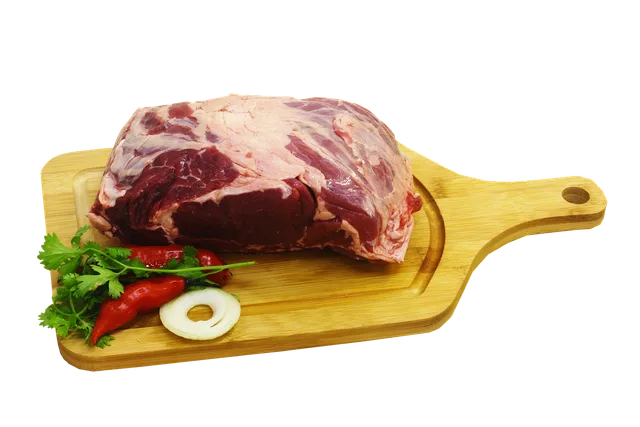
The national price trend points the same way for a menu built on beef and fish. In its September 2026 Food Price Outlook, USDA's Economic Research Service forecasts that beef and veal and fish and seafood prices will grow faster than their 20-year historical average rate in 2026, while pork, other meats and poultry are forecast to grow slower than theirs. For 2026 it forecasts beef and veal prices to increase 9.4 percent, with a forecast interval of 7.4 to 11.6 percent; pork prices to increase 1.2 percent, with a forecast interval of -0.1 to 2.6 percent; poultry prices to increase 1.0 percent, with a forecast interval of 0.0 to 2.1 percent; and egg prices to decrease 29.4 percent, with a forecast interval of -32.9 to -25.2 percent. For 2027, it forecasts food-at-home prices to increase 1.8 percent and food-away-from-home prices to increase 2.6 percent. The supply side explains part of it. The ERS cattle and beef market outlook, updated in September 2026, says fed cattle slaughter remains historically low, leading to lower beef production forecasts for 2026 and 2027. Its poultry and eggs market outlook expects higher broiler production in 2027, with growth slowing from recent years, and says projected broiler prices were adjusted lower in 2026.
The figures behind that chicken trend are in the ERS Livestock, Dairy, and Poultry Outlook: the national composite wholesale whole broiler price has a new 2026 average projection of 119.0 cents per pound, down from 124.8 cents per pound in 2025, and the 2027 projected average price is unchanged at 121.5 cents per pound. The same report says the 2027 slaughter steer price outlook still reflects strength from tight supplies, so beef is the protein to watch on next year's invoices.
For a fixed-price weekly box, that is an argument for leaning rotating menus toward poultry and pork when beef and salmon invoices climb, and for checking food cost percentage on beef weeks first.
Prices for meals bought away from home are forecast to rise at their 20-year historical average rate in 2026, according to the same ERS outlook. That is the price your subscribers compare a box against, so a restaurant meal getting dearer gives a little room on your own price, not a reason to stop costing.
Labor is the second. Batch cooking rewards volume, but packing and labeling scale with box count, not batch size. A kitchen that produces efficiently on Sunday can still lose Monday to packing labor.
Packaging is where small operators overspend. Sealed trays, sleeves, ice packs and insulated liners are all per-box costs. Get them on one line of your costing sheet.
Delivery is the one owners underprice. It is not a fixed cost. It scales with stops and distance.
Delivery radius: set it, then defend it
Pick a radius by drive time, not by miles on a map. A twenty-minute ring around your commissary is a workable starting boundary.
Then check density inside that ring. Count stops per square mile. Below a threshold you set yourself, a route does not pay for its driver hours. Set that threshold from your own route cost rather than from a national figure.
Three levers tighten a radius without shrinking revenue:
Delivery radius
- Pickup points. One address serves several subscribers, so the last mile disappears.
- Zone minimums. A distant stop carries its own driver cost in the order value.
- Fewer delivery days. Two runs a week per zone instead of five cuts driver hours per box.
Tighten delivery radius
- Set minimum order value outside core ring
- Consolidate delivery days by zone
- Add a pickup point for a zone
Pickup points also convert a delivery cost into a marketing channel. That is where the partner conversation starts.
Marketing channels side by side
Fits a meal prep business when
- Word of mouth
- Subscribers live and work close enough to hand a box to a neighbor
- Gyms and trainers
- The trainer already sends clients to a named food source
- Maps and local listings
- Subscribers search for prepared meals near home or work
- Repeat and retention offers
- The same customer orders on a repeating weekly cycle
Weak point
- Word of mouth
- Slow to start
- Gyms and trainers
- Partners expect something in return
- Maps and local listings
- Competitors bid on the same terms
- Repeat and retention offers
- Discounts train customers to wait for them
Retention offers deserve their own line in the budget. A subscriber who stays twenty weeks is worth more than two who stay ten, and the second pair costs you acquisition twice.
What to verify before you commit
Three published sources anchor the planning.
The SBA business guide organizes ownership into planning, launch, management and growth, and its market research and startup cost sections are the place to build a radius model before you sign anything.
The Bureau of Labor Statistics food service managers page describes the role as covering these areas:
- staff
- supplies
- preparation
- sanitation
- budgets
- payroll records
The schedule includes nights, weekends and holidays. That is the labor line in your costing sheet.
The FDA state retail and food service codes directory lists the retail food agency for each state. States adopt the FDA Food Code, usually with amendments of their own, so your commissary, packaging and delivery model has to clear the version your state enforces.
For the expansion arithmetic itself, the meal prep expansion and market guide walks through the same variables. If you are still choosing a production model, start with the meal prep startup guide instead.
Common questions
These are the questions owners ask most once the protein outlook and their own route data are side by side.
How do I know if my delivery radius is too wide?
Compare cost per delivery against contribution margin per box for each zone. If a zone's cost per delivery exceeds a third of its contribution margin, it is either underpriced or too far out. Raise the minimum order value there before you cut the zone.
What food cost percentage should a meal prep business target?
There is no universal number. Calculate yours as cost of goods divided by revenue for the same week, using your own supplier invoices, then watch the trend rather than the level. A figure that rises three weeks running means protein pricing or portion drift, and both are fixable.
Does a subscription model fix churn?
No. It changes when churn shows up, not whether it does. Track stops per route per month and compare them against new sign-ups in the same zone. For the churn trend itself, divide the month's cancellations in a zone by the active subscribers that zone had on the first of the month, and plot that rate monthly; a rising line in one zone while others hold flat usually points to a delivery problem there, not to the menu. A route that replaces a third of its stops every quarter is not growing, it is running to stand still.
Should I add a second commissary or widen the first radius?
Widen only if the new stops sit inside your existing drive-time ring. If they do not, a second production point usually costs less than the driver hours, but confirm the second site against your state retail food code first.