Guides
Meal prep expansion compared with what actually happens
Meal prep expansion choices look different once rent, labor, cold chain, kitchen equipment and delivery radius are priced against the volume each one adds.
What to take away
- Meal prep expansion is a capacity decision first. Find the constraint (oven hours, blast chiller space, packer hands, van routes) before you price any option.
- Commissary, shared-use kitchen, satellite pickup site and cottage food home operation each solve a different constraint and carry a different fixed cost.
- Food cost percentage, contribution per box, churn and delivery cost per drop are the four numbers that tell you whether added volume paid for itself.
- Every new site needs a named food-safety lead, a written HACCP-based plan and a verified cold chain from cook to doorstep.
- Permits, labeling and cottage food limits are set by your state and county. Confirm with the local health department before you sign anything.
- Budget for the gap between the fixed cost you sign and the volume you sell. The cost starts in month one. The boxes arrive later.
What expansion actually costs you
Meal prep expansion is rarely a marketing problem. It is a throughput problem wearing a marketing costume.
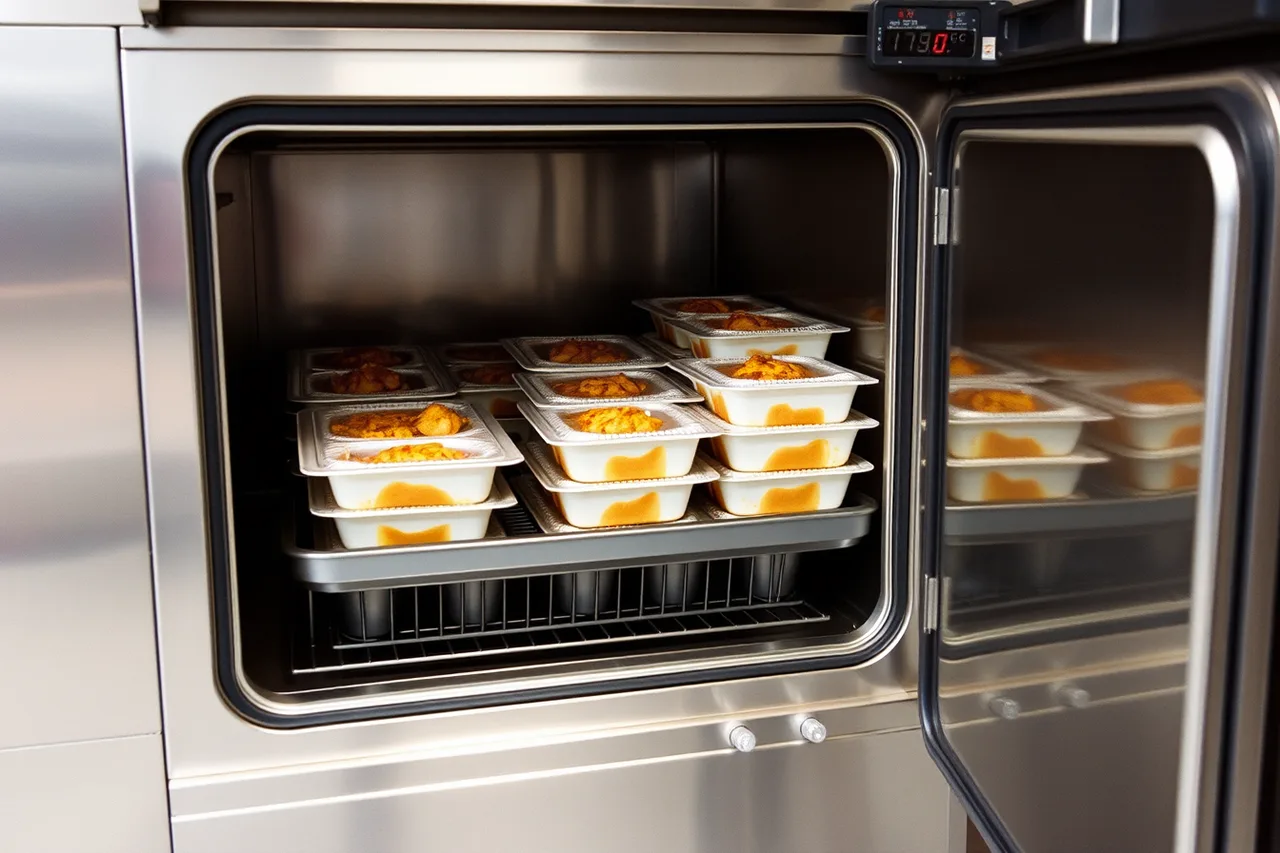
An owner at 180 boxes a week turns away 40 inquiries and concludes the business needs a second kitchen. The real constraint is often the blast chiller, which caps how fast cooked food drops through the danger zone.
Add a kitchen and you have added rent without adding a single box of sellable capacity. The arithmetic below is the one that matters.
Cooling usually sets the ceiling before cooking does. A reach-in blast chiller typically runs one batch at a time and takes about 90 minutes to bring food from 135°F to 41°F. Run it twelve hours a day and the daily limit is fixed; a second oven cannot raise it.
The plan versus what actually happens
Seven assumptions shape most meal prep expansions. Here is where each one usually breaks.
What the plan assumes
- Cost timing
- Fixed cost starts when the extra volume starts
- Throughput
- More ovens mean more boxes
- Demand
- Volume grows steadily week to week
- Kitchen hours
- You book the shifts you want
- Labor
- The crew scales with the order list
- Cash
- Sales pay for ingredients
- Cold chain
- The route runs the same in July as in January
What typically happens
- Cost timing
- Lease, hourly kitchen blocks and equipment payments start at signing
- Throughput
- The cooling step caps output, so ovens sit idle
- Demand
- January and September spikes, summer and holiday troughs
- Kitchen hours
- New members get off-peak slots, often late night
- Labor
- Hiring lags, and one trained packer carries the line
- Cash
- Co-packing minimums and freezer inventory tie up cash for weeks
- Cold chain
- Summer traffic and heat push the drop time out
The fixed cost arrives on day one. The added volume usually arrives one to two quarters later, if it arrives at all. Contribution per box carries the whole bill in between.
Where the volume comes from is the second surprise. Operators who add capacity often sell more to existing customers first. If churn is running high, the new capacity gets spent replacing boxes that left rather than adding net boxes.
The third is that a busy week is not a trend. A January spike covered by extra hours can look like proof of demand. By March the same kitchen runs at 40 percent of capacity and the rent has not moved.
The four numbers that decide it
Work these with your own figures. Do not borrow anyone else's.
- Food cost percentage
- = ingredient cost per box ÷ box price. Track weekly, by recipe.
- Contribution per box
- = box price − ingredients − packaging − delivery cost per drop − payment processing.
- Break-even boxes
- = fixed monthly cost (rent, insurance, software, salaried labor) ÷ contribution per box.
- Delivery cost per drop
- = driver hours + fuel + vehicle wear ÷ drops on that route.
If break-even boxes is above your current weekly volume plus realistic growth, the expansion is a bet on demand you have not proven. Prove it with a waitlist first.
The five expansion routes, compared
Constraint it solves
- Commissary kitchen lease
- Oven, chiller and storage hours
- Shared-use or incubator kitchen
- Capital, licensing, startup
- Satellite pickup site
- Delivery radius, customer drive time
- Cottage food home operation
- Startup cost, first customers
- Co-packing or white-label partner
- Labor, equipment, scale
Fixed cost shape
- Commissary kitchen lease
- High monthly rent, multi-year term
- Shared-use or incubator kitchen
- Hourly or monthly membership
- Satellite pickup site
- Small rent or revenue share
- Cottage food home operation
- Near zero fixed
- Co-packing or white-label partner
- Per-unit fee, minimum runs
Typical cost, as of 2026
- Commissary kitchen lease
- About $2,000 to $6,000 a month in most markets
- Shared-use or incubator kitchen
- About $20 to $60 an hour, or $300 to $1,200 a month
- Satellite pickup site
- About $300 to $1,500 a month
- Cottage food home operation
- Food handler card around $10 to $30, plus permit fees
- Co-packing or white-label partner
- Quoted per unit; minimum runs often start in the low thousands of units
Main risk
- Commissary kitchen lease
- Lease liability if volume stalls
- Shared-use or incubator kitchen
- Limited slots, shared cold storage
- Satellite pickup site
- Cold chain breaks in transit
- Cottage food home operation
- State sales and labeling limits
- Co-packing or white-label partner
- Margin compression, less control
Each route is a different answer. Pick the one that removes your actual bottleneck, not the one a competitor made visible.
Named operators and what they run
These are real companies. Study the model, not the menu.
Factor runs a subscription meal delivery business on a network of production kitchens rather than one owned facility, which lets it shift volume between sites as demand moves. HelloFresh acquired Factor in 2020. The model suits operators whose constraint is production capacity, not customer acquisition.
Freshly built a single large production facility and shipped nationally from it. Nestlé bought the company in 2020 and announced in late 2022 that it would wind the service down; deliveries stopped in January 2023. One plant is efficient until it is not, and the fixed cost is unforgiving.
Home Chef sells through retail grocery channels as well as direct subscription, which spreads demand across two very different order cycles. Kroger acquired Home Chef in 2018, and the brand now sits in Kroger aisles beside the subscription. That mix suits an operator whose bottleneck is customer acquisition cost rather than kitchen hours.
Daily Harvest started as a direct-to-consumer frozen subscription before adding retail, and it shows how a narrow menu can carry a wide delivery radius. It also shows the exposure: in June 2022 the company recalled its French Lentil + Leek Crumbles after customer illnesses, and federal investigators later named tara flour in the product as the likely cause.
HelloFresh operates multiple regional distribution centers, so delivery radius is a routing decision rather than a single-site limit. It suits operators whose constraint is last-mile cost, not cooking.
CookUnity uses a marketplace of independent chefs producing under one brand and one logistics layer. That structure suits an operator who has kitchen capacity and wants demand without building a marketing engine.
Territory Foods runs a regional, chef-driven model with rotating menus and local pickup points. It suits operators whose customers care about proximity and freshness over national consistency.
Sakara Life sells a premium, plant-based subscription with a narrow production footprint and a high price per box. It suits operators whose contribution per box can absorb expensive ingredients and cold shipping.
Trifecta targets a specific nutrition segment rather than a general audience, which narrows the menu and simplifies production planning. It suits operators who can name exactly who the box is for.
Purple Carrot pairs subscription boxes with retail placement, and it shows how a plant-based menu can hold a consistent cost structure across both channels. It suits operators with a defined dietary niche.
Roles that change when you expand
A single-site operation runs on the owner plus a prep cook. A second site or a national shipping model changes the roster.
- Chef or kitchen lead
- owns recipe yield, batch sizing and cook schedules.
- Prep cook
- executes the day's production list against the prep sheet.
- Packer
- builds boxes to the pack spec and checks seals and labels.
- Food-safety lead
- owns the HACCP-based plan, temperature logs and corrective actions.
- Delivery coordinator
- owns routes, cold chain in transit and drop confirmations.
- Customer-service lead
- owns substitutions, missed deliveries and refunds.
The Bureau of Labor Statistics food service managers profile lists the same duties at the management layer: staffing, supplies, food preparation, sanitation and customer issues. Schedules often cover nights, weekends and holidays.
If no one is named to the food-safety lead role at the new site, the expansion is not ready. That role is not a hat the packer wears when the inspector visits.
Cold chain and the delivery radius
Cooked food has to move from the cook step to the customer's door without spending time in the range where bacteria multiply. Your local health department sets the temperatures and the time limits that apply to your process, so confirm them there rather than from a guide.
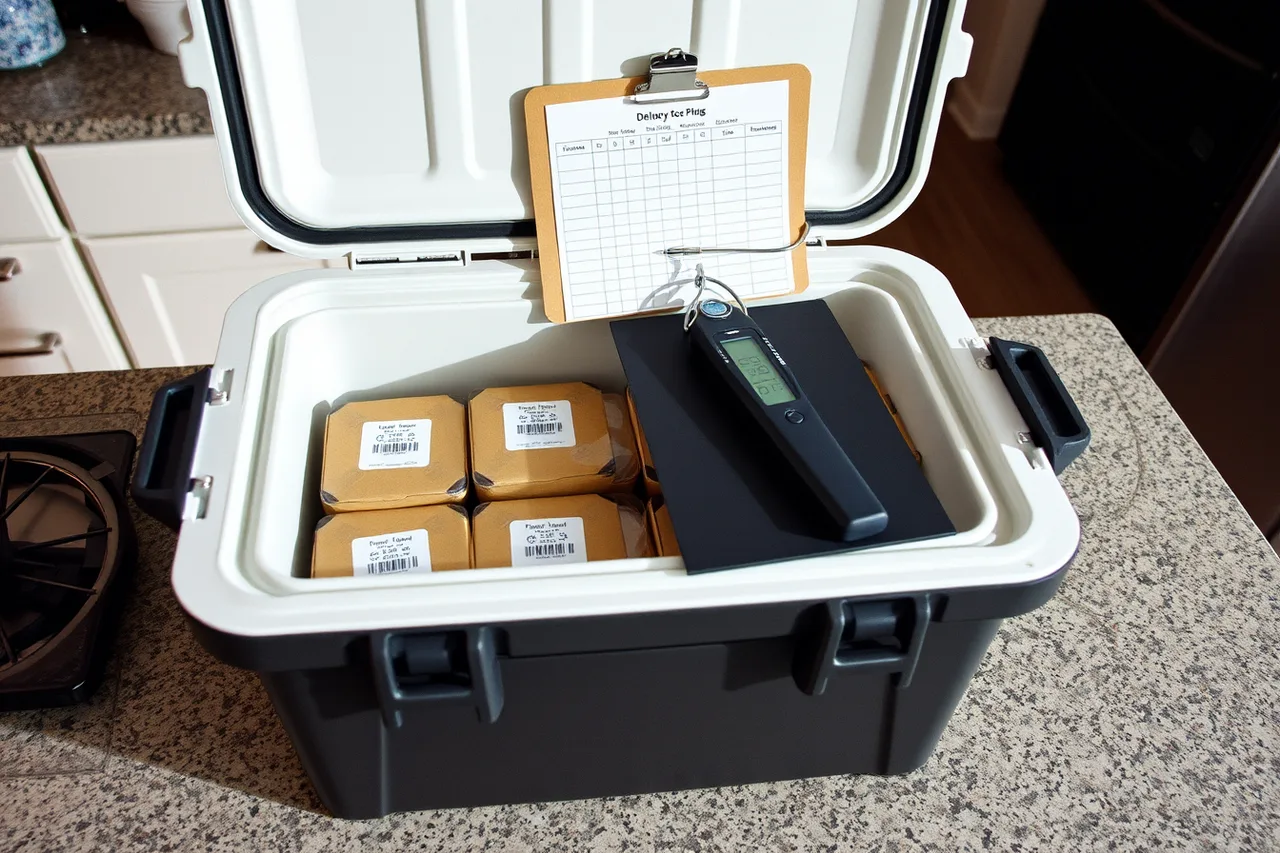
The FDA Food Code, which most states adopt in some form, gives a common starting point: cool cooked food from 135°F to 70°F within two hours, then to 41°F within four more, six hours in total. Your state may set a tighter limit.
The practical expansion question is radius. A route that takes 90 minutes in summer traffic is a different cold-chain problem than one that takes 25 minutes. Before adding a satellite site, drive the route at the hour you would actually run it.
Two checks that catch most failures:
- Every drop has a recorded departure time and a recorded arrival time.
- Every cooler has a temperature log with a named reviewer and a corrective action line.
The FDA state retail and food service codes directory lists the agency that regulates retail food in each state. Find yours before you design the route, because the rules that govern holding and transport are set locally.
Permits, labeling and the cottage food question
Cottage food laws are state law. They set what you may sell, where you may sell it, how much revenue you may take and what the label must say. Some states cap annual sales; some restrict sales to direct-to-consumer only; some require a food handler card.
Caps vary widely. Several states set no annual limit at all, and many land between $15,000 and $75,000 in gross sales, with separate tiers for direct and retail sales. Treat that as a typical range and check your state's current figure.
None of that is uniform, and none of it should be guessed. Confirm with your state's cottage food authority and your county health department before you build a business on a home kitchen.
The same applies to labeling. Ingredient statements, allergen declarations and net weight are regulated, and the requirements shift with what is in the box and where it is sold. A qualified food safety professional or your state regulator is the right source, not a template.
The SBA business guide organizes ownership into planning, launch, management and growth.
It covers these topics:
- market research
- startup costs
- permits
- insurance
- finance
- hiring Use it as a checklist for what you have not yet documented, not as a substitute for your state's rules.
A worked example: 300 boxes a week
Suppose you sell 300 boxes a week at a price you set, and your contribution per box is $6. Your fixed monthly cost is $9,000. Break-even is 1,500 boxes a month, or about 375 a week. You are below it.
Now suppose a shared-use kitchen at $22 an hour, 30 hours a week, adds $2,860 a month in fixed cost and lets you produce 500 boxes a week. New break-even is 1,977 boxes a month, or about 494 a week.
The expansion only works if you can sell 494 boxes a week, not 500. That gap between the capacity you buy and the volume you must sell is where most meal prep expansions fail.
Month one of that plan looks like this: you pay the $2,860 and still sell 300 boxes. The kitchen earns its keep only if the waitlist converts, and the invoice does not care either way.
Substitute your own price, contribution and rent figures. The structure holds; the numbers do not travel between businesses.
Common questions
Should I lease a commissary kitchen or start in a shared-use kitchen?
Start shared-use unless you already have committed demand that fills the hours. A commissary lease is a multi-year fixed cost, and it converts a demand problem into a lease liability. Shared-use lets you test volume before you sign.
How do I know my bottleneck is capacity and not marketing?
Count turned-away orders for four consecutive weeks. If you are turning away paying customers at your current price, you have a capacity constraint. If inquiries are flat, you have a demand constraint, and a bigger kitchen will not fix it.
What has to be in place before a second site opens?
A named food-safety lead, a written HACCP-based plan for that site, verified temperature logs, a trained crew on the prep sheet, and a costed delivery route. Confirm permit and licensing requirements with your state and county health department first.
When should I stop an expansion?
Set the stop condition before you start. A workable one: if contribution per box falls below your stated floor for two consecutive months and volume has not grown, pause and re-examine demand, training, pricing and data quality before changing anything else.