
Guides
Training a new meal prep business employee: the checklist
Training a new meal prep employee with this checklist covers allergens, labeling, cold chain and delivery routes, with sign-off before they work a shift alone.
What to take away
- A meal prep hire is not trained until they can pack a labeled box, hold the cold chain, and run a route without a supervisor watching.
- Allergen handling, date marking and temperature records are the three tasks that cause the most expensive mistakes in a subscription kitchen.
- Every station needs a named trainer and a signed sign-off sheet, not a verbal "they seem fine."
- Pay, scheduling and hiring questions sit with the U.S. Department of Labor and the EEOC; food handling rules sit with your state or county health department.
- The FDA Food Code is the reference your inspector works from, so train to it rather than to habit.
Start with the tasks that can hurt someone
Most meal prep training checklists are written for restaurants, where food leaves the building in minutes. A subscription kitchen is different: the box sits in a cooler, rides in a van, and waits on a porch. That gap is where the risk lives.
Training order for new hires
- Allergens first
- Labeling second
- Cold chain third
- Route and customer contact fourth
- Everything else can wait a week
Allergen control comes first because a mislabeled box is the one error a customer cannot catch by looking. Your trainer should walk the new hire through your ingredient list, your storage separation, and the clean-down method.
The FDA Food Code and your local health department set the actual requirement, and it varies by state and by county.
The four stations worth a sign-off
The four stations are allergen and cross-contact, labeling and date marking, cold chain, and route and delivery.
Allergen and cross-contact station
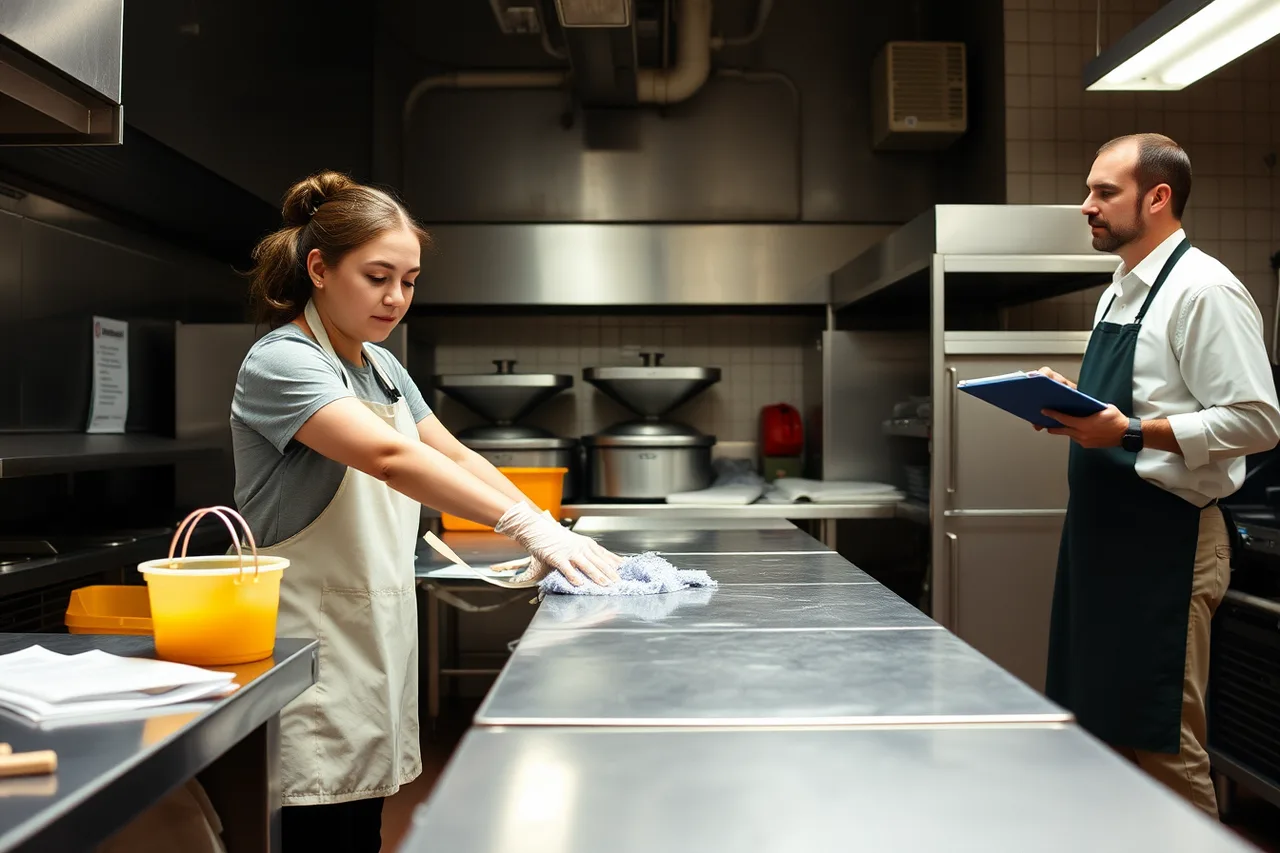
The hire reads the current ingredient list, identifies the allergens on it, and shows where each one is stored. They demonstrate the clean-down between a peanut run and a tree-nut-free run. Sign-off means they did it while someone watched. Wash, rinse, then a chlorine sanitizer at 50 to 100 ppm, left wet for 10 seconds.
Labeling and date marking
Under FSIS labeling rules, a packaged food needs its identity, net quantity, ingredient statement, and allergen declaration. Your kitchen adds a use-by or freeze-by date. Train the hire to check the label against the batch sheet before the lid goes on, because a label printed for the wrong SKU is a recall, not a reprint.
Cold chain
This is the station most new hires underestimate. They need to know the target temperature for your holding cooler, how often it is logged, what to do when a reading drifts, and how long a box can sit in a delivery bag.
A typical holding cooler runs at 34 F to 40 F, inside the 41 F cold-holding limit in the FDA Food Code. Log it at least twice per shift, at open and at close, and again after a long door opening.
A box sits in a delivery bag for no more than 30 minutes as a typical cap, and that time counts toward the two-hour limit food may spend between 41 F and 135 F. Set your own targets inside those limits and train to them.
Route and delivery
A driver is the last person who can catch a bad box. Train them to check the seal, the label and the cooler before the van moves, and to log the time each box leaves. If your business uses insulated bags with ice packs, the hire should know the pack-out sequence cold to cold.
A worked example: week one for a new packer
Week one for a new packer
| Day | Focus | Sign-off | What pass looks like |
|---|---|---|---|
| 1 | Kitchen tour, handwashing, allergen list, storage map | Trainer initials | Names every allergen in the kitchen and points to where it is stored |
| 2 | Label check against batch sheet, date marking | Trainer initials | Catches a label printed for the wrong SKU before the lid goes on |
| 3 | Cooler temps, logging, what to do on a drift | Trainer initials | Reads the thermometer, writes the log, and says the drift step out loud |
| 4 | Pack-out sequence, seal check, bag staging | Trainer initials | Packs cold to cold and seals every box on the first try |
| 5 | Full shift with a shadow, then solo pack under observation | Manager sign-off | Solo run packed with no label, seal or cold chain error |
Five days is a reasonable frame for a packer. A driver needs a route ride-along before they run it alone, and a prep cook needs longer on knife work and batch consistency.
Hiring and pay questions belong to the regulators
Pay rates, overtime, timekeeping and child labor rules come from the U.S. Department of Labor and your state wage agency. The DOL's small business compliance assistance page lays out what a new employer has to know.
Do not set a starting wage from a guess; check current local postings and the BLS Food Service Managers occupation page for the shape of the role.
Hiring decisions carry their own rules. The EEOC's small business resource center covers nondiscrimination, accommodations and recordkeeping for small employers. Ask every candidate the same job-related questions and keep the notes.
Common questions
How long should training take before someone works alone?
It depends on the station. A packer can be solo in about a week if they have passed every sign-off. A driver needs at least one supervised route. Nobody should work a solo shift on a station where they have not been observed doing it correctly.
Do I need a written training record?
Yes, and it should carry a date and a trainer name. If an inspector or an insurer asks who was trained on allergen handling and when, a verbal answer is not a record.
Keep the signed sheets for the length of employment plus three years. That matches the three-year floor the FLSA sets for payroll records, and your insurer or state may ask for longer. Keep the current version in the kitchen and retire the old one.
What if my state's rules differ from what I read online?
They probably do. Food handling, labeling and delivery requirements are set by your state and county health department, and they change. Call your local regulator, get the answer in writing, and train to that.